Screw Extractor vs Left-Hand Drill Bits: Which One Works Better?
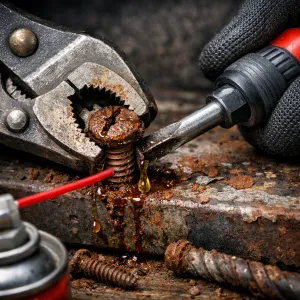
If you’ve got a stripped or stuck screw, you’ll often see two tools recommended: screw extractors and left-hand drill bits. Both can work — but they’re not interchangeable, and using the wrong one can make the problem worse.
This guide explains how each tool works, when to use which, and how many people successfully remove a screw using both together.
The Short Answer
-
Left-hand drill bits are usually the best first step
-
Screw extractors are better for severely stuck or stripped screws
-
Using them together gives the highest success rate
Let’s break that down properly.
What Is a Left-Hand Drill Bit?
A left-hand drill bit spins counter-clockwise, the opposite direction of a normal drill bit.
Since screws loosen counter-clockwise, a left-hand bit does two things at once:
-
Drills into the screw
-
Applies loosening force at the same time
Why this matters
In many cases, the screw backs out while you’re drilling, without needing an extractor at all.
When Left-Hand Drill Bits Work Best
Left-hand drill bits are ideal when:
-
The screw head is damaged but still intact
-
The screw is not fully seized
-
You want the least aggressive solution
-
You’re working with smaller screws
Pros
-
Simple to use
-
Lower risk of snapping the screw
-
Often solves the problem on its own
-
No extra steps required
Cons
-
Less effective on heavily rusted or seized screws
-
May not bite if the screw is extremely hard
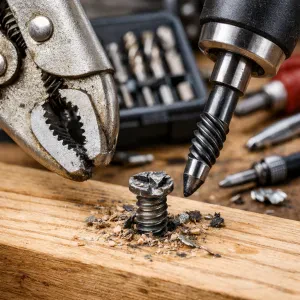
What Is a Screw Extractor?
A screw extractor is designed to bite into the screw and force it out in reverse.
Most extractors work in two stages:
-
Drill a pilot hole
-
Insert the extractor and turn counter-clockwise
As the extractor turns, it digs in tighter, allowing you to remove screws that drilling alone can’t budge.
When Screw Extractors Work Best
Screw extractors are the better choice when:
-
The screw head is fully stripped
-
The screw won’t move after drilling
-
Rust or corrosion has seized the threads
-
The screw snapped partially but still has material to grip
Pros
-
Strong gripping power
-
Effective on badly damaged screws
-
Works when other methods fail
Cons
-
More aggressive
-
Requires drilling accurately
-
Can snap if used with too much force
The Best Method: Use Both Together
Most professionals don’t choose one or the other — they use left-hand drill bits first, then extractors if needed.
Step-by-step approach:
-
Drill a centered pilot hole using a left-hand drill bit
-
If the screw backs out — you’re done
-
If not, insert a screw extractor into the same hole
-
Slowly turn counter-clockwise to remove the screw
This method:
-
Minimizes damage
-
Reduces broken extractor risk
-
Gives the highest success rate overall
Which One Should You Buy?
It depends on how often you deal with stripped screws.
Occasional DIY repairs
-
A small left-hand drill bit set may be enough
Regular DIY or automotive work
-
A combo kit with left-hand bits and extractors is the most flexible
Severely rusted or snapped screws
-
A dedicated screw extractor set is essential
👉 You can see our recommended extractor and combo kits here:
Top Screw Extractor Sets for DIY & Automotive Repairs
Common Mistakes to Avoid
-
❌ Drilling too fast
-
❌ Drilling off-center
-
❌ Using too much torque on extractors
-
❌ Skipping penetrating oil
-
❌ Forcing a stuck extractor
Slow, steady pressure works best.
Final Verdict
If you’re choosing between the two:
-
Start with left-hand drill bits
-
Move to a screw extractor if needed
-
For best results, use both together
That combination solves most stripped and stuck screw problems without breaking tools or damaging materials.
FAQ
Do left-hand drill bits really remove screws?
Yes. Many screws back out while drilling, especially if they’re not fully seized.
Are screw extractors better than drill bits?
They’re stronger, but also more aggressive. Drill bits are safer to try first.
Can screw extractors break?
Yes, if you use too much force or drill off-center. Slow speed and patience matter.