How to Remove a Rusted Screw Without Breaking It
A rusted screw can turn a simple repair into a frustrating mess. Apply too much force and the head strips. Push harder and the screw snaps off entirely — leaving you with a much bigger problem.
The good news is that most rusted screws can be removed cleanly if you follow the right steps and use the right tools. This guide walks through proven methods, starting with the safest options and moving up only if needed.
Why Rusted Screws Are So Hard to Remove
Rust causes the screw threads to bond to the surrounding material (wood, metal, or masonry). Over time, moisture and oxidation essentially “lock” the screw in place.
That’s why brute force usually fails — you’re fighting chemistry, not just friction.
Tools That Help (Before You Start)
You don’t need everything on this list, but having one or two makes a big difference:
-
Penetrating oil (WD-40, PlusGas, PB Blaster, etc.)
-
Correct-size screwdriver or bit
-
Hammer
-
Locking pliers (vise grips)
-
Left-hand drill bits
-
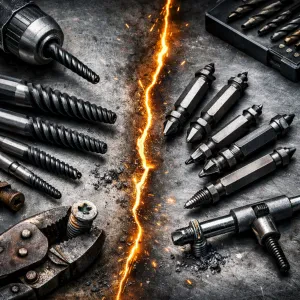
Screw extractor set
If the screw head is already damaged, skip ahead to the extractor methods below.
Method 1: Penetrating Oil + Patience (Always Start Here)
This is the safest and most overlooked step.
What to do:
-
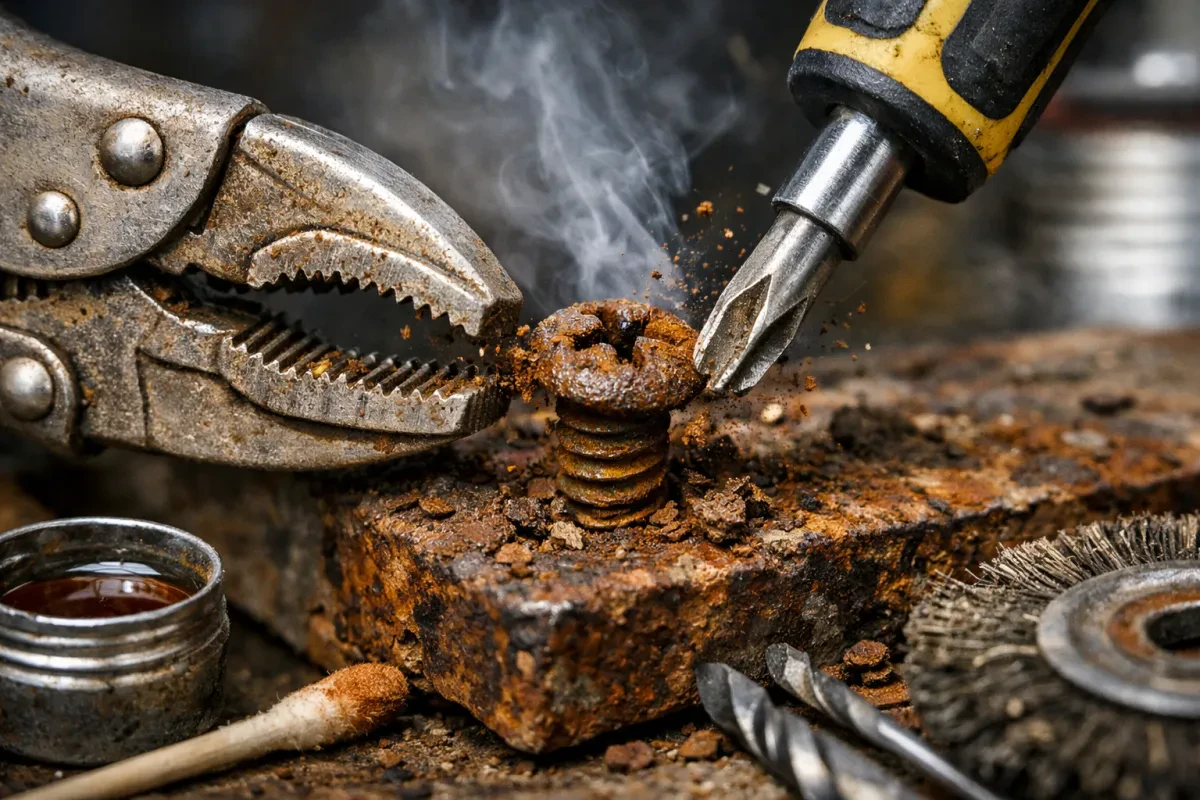
Spray penetrating oil directly onto the screw head and around the threads.
-
Let it soak for 10–30 minutes (longer for heavily rusted screws).
-
Lightly tap the screw head with a hammer. This helps the oil work into the threads.
-
Try loosening the screw slowly with steady pressure.
Pro tip:
Try tightening the screw slightly first, then loosening. This can help break the rust bond.
Method 2: Improve Your Grip Before Turning
Many screws strip because the bit isn’t seated properly.
Try this:
-
Use the exact screwdriver size (Phillips, Pozidriv, Torx, etc.)
-
Push hard into the screw head
-
Turn slowly and steadily — no sudden jerks
If the head starts to deform, stop immediately. Continuing will only make extraction harder.
Method 3: Heat (For Metal Screws)
Heat causes metal to expand, which can break the rust’s grip.
How to apply heat safely:
-
Use a heat gun or small torch
-
Heat the screw head for 20–30 seconds
-
Let it cool slightly
-
Try loosening again
⚠️ Do not use open flame near flammable materials, wiring, or finished surfaces.
Method 4: Locking Pliers (If the Head Is Exposed)
If the screw head sticks out even slightly:
-
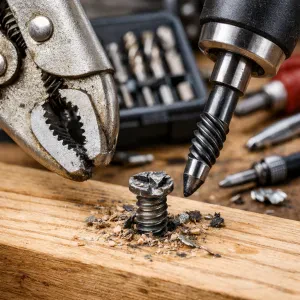
Clamp locking pliers tightly onto the head
-
Rock the screw back and forth gently
-
Slowly twist it out
This works surprisingly well on larger screws and bolts.
Method 5: Left-Hand Drill Bits (Highly Effective)
Left-hand drill bits spin counter-clockwise, the same direction needed to remove a screw.
Steps:
-
Drill a small pilot hole into the center of the screw
-
Use slow speed and steady pressure
-
Often, the screw will back itself out while drilling
This method alone solves many stuck screws without needing an extractor.
Method 6: Screw Extractor (When All Else Fails)
If the screw is badly rusted or the head is stripped, a screw extractor is usually the cleanest solution.
How it works:
-
One end drills into the screw
-
The extractor bites and turns the screw out in reverse
Tips for success:
-
Drill straight and centered
-
Use slow speed
-
Don’t force it — let the extractor bite naturally
If you’re dealing with stubborn or rusted screws regularly, a basic extractor kit is worth keeping in your toolbox.
👉 You can see our recommended screw extractor sets here:
Top Screw Extractor Sets for Stripped Screws
What If the Screw Snaps?
If the screw breaks off flush or below the surface:
-
Try a left-hand drill bit first
-
Then move to an extractor sized correctly for the hole
-
As a last resort, drill it out completely and re-tap or plug the hole
Mistakes to Avoid
-
❌ Using the wrong screwdriver size
-
❌ Applying full force immediately
-
❌ Drilling too fast
-
❌ Skipping penetrating oil
-
❌ Continuing after the head starts to strip
Stopping early often saves the screw.
Final Thoughts
Rusted screws are frustrating, but they’re rarely unbeatable. Start slow, increase force gradually, and use tools designed for the job.
In many cases, the right technique matters more than brute strength.
If you want a deeper breakdown of tools that work best for stuck and stripped screws, check out our full comparison guide here:
👉 Top Screw Extractor Sets for DIY & Automotive Repairs
FAQ
Can WD-40 remove rusted screws?
Yes, WD-40 works for light rust, but dedicated penetrating oils often perform better on heavily seized screws.
Do screw extractors really work?
Yes — when used correctly. Most failures come from drilling off-center or using too much speed.
What’s better: extractor or left-hand drill bit?
Left-hand drill bits often work first and are less aggressive. Extractors are best when drilling alone doesn’t loosen the screw